
If you speak my name, I vanish. What am I? Silence.”
– Guido/Roberto Benigni
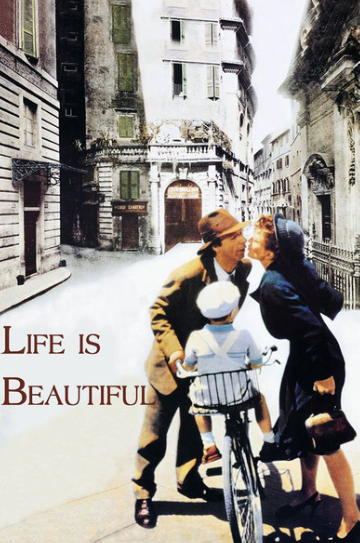
An open-minded Jewish waiter and his son use will, humor, and imagination to protect each other from the dangers of the Holocaust.
Released: 1997-12-20
Casts: Roberto Benigni, Nicoletta Braschi, Giorgio Cantarini, Giustino Durano, Amerigo Fontani
Released: 1997-12-20
Casts: Roberto Benigni, Nicoletta Braschi, Giorgio Cantarini, Giustino Durano, Amerigo Fontani
Introduction:
In the midst of World War II and the Holocaust, “Life Is Beautiful” emerges as a cinematic gem that leaves an indelible mark on the soul. Directed by Roberto Benigni, this Italian masterpiece takes us on a poignant journey through the life of Guido, a spirited and loving Jewish man, and his extraordinary efforts to protect his son amidst the horrors of a concentration camp. Through its captivating plot, the film reminds us of the power of love, laughter, and unwavering resilience, even in the darkest of times.
Plot Summary:
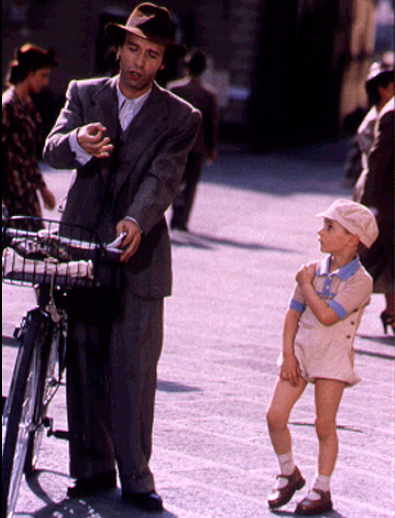
Set in pre-war Italy, “Life Is Beautiful” introduces us to Guido, a charming and charismatic man played by Roberto Benigni. Guido’s life takes an enchanting turn when he falls in love with Dora, portrayed by Nicoletta Braschi, a beautiful schoolteacher. Their budding romance is filled with joy, laughter, and playful moments, creating a heartwarming atmosphere.
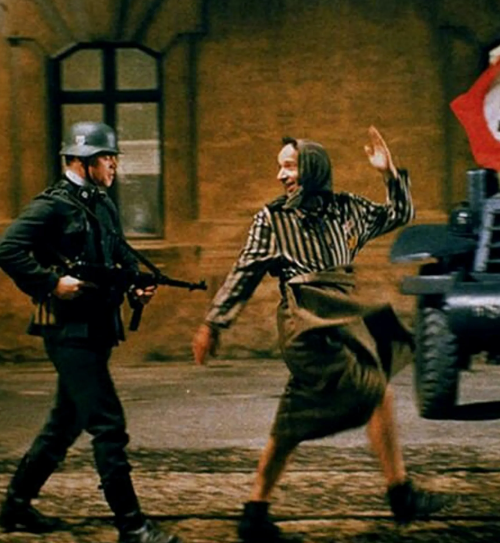
However, the outbreak of World War II interrupts their idyllic existence. Guido, Dora, and their son Giosué are forcibly separated and sent to a concentration camp. Guido’s unwavering love for his family drives him to protect his young son from the horrors of the camp. To shield Giosué from the harsh reality, Guido cleverly turns their daily struggles into a game. He convinces Giosué that they are participating in an elaborate competition to win a tank, transforming the grim circumstances into a world of imagination, hope, and laughter.
Guido’s unwavering optimism and quick wit provide solace and strength to Giosué amidst the darkness that surrounds them. Through his ingenious acts, Guido brings joy and a sense of normalcy to Giosué’s life, demonstrating the power of the human spirit to triumph over despair.
The film showcases the daily challenges faced by Guido and the prisoners, as well as the relentless cruelty of their captors. Despite the atrocities, Guido’s spirit remains unbroken, radiating love, compassion, and resilience. His sacrifices and selflessness are portrayed with gut-wrenching intensity, as he puts his own life on the line to protect his son and ensure his survival.
In a heartrending conclusion, Guido’s ultimate sacrifice brings a glimmer of redemption and hope. Years later, we witness the profound impact of Guido’s teachings on a grown-up Giosué, revealing the lasting legacy of love, courage, and resilience that Guido has left behind.

Conclusion:
Life Is Beautiful invites us to reflect on the profound meaning of love and resilience. The film teaches us to find beauty in unexpected places. In a concentration camp, where darkness overshadows all, Guido’s ability to infuse moments with laughter and joy is a testament to the human capacity for resilience and the triumph of the human spirit. It encourages us to shift our perspective and see beyond the surface, discovering the glimmers of beauty that exist even in the most unlikely of circumstances.
As the credits roll, tears stream down to my face, mingling sorrow and awe. Life Is Beautiful leaves an indelible mark on my soul, reminding me that amidst the harshest realities, the most heart-wrenching tragedies, and the deepest sorrows, life’s inherent beauty persists. It urges me to cherish every moment, to hold my loved ones close, and to embrace the incredible gift of life, no matter what challenges we may face.
#LifeIsBeautiful #EmotionalMasterpiece #ResilienceOfTheHumanSpirit
References:
- Benigni, R. (Director). (1997). Life Is Beautiful [Motion Picture]. Italy: Cecchi Gori Group.
- https://www.imdb.com/title/tt0118799/

 The Anxious Panda Writes